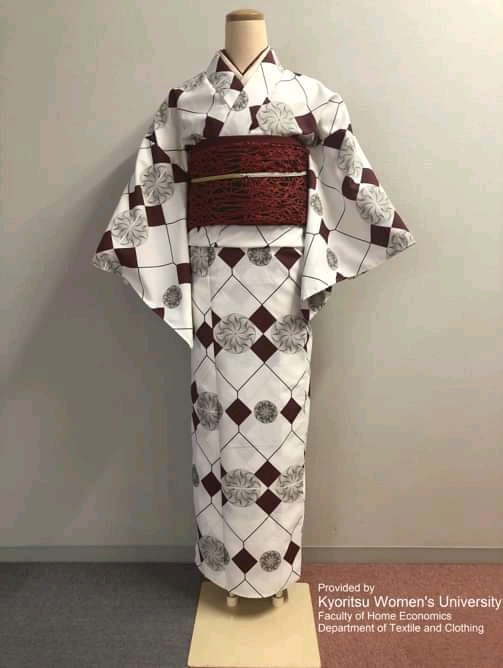
There are typically two types of clothing worn in Japan: traditional clothing known as Japanese clothing (和服, wafuku), including the national dress of Japan, the kimono, and Western clothing (洋服, yōfuku), which encompasses all else not recognised as either national dress or the dress of another country.
Traditional Japanese fashion represents a long-standing history of traditional culture, encompassing colour palettes developed in the Heian period, silhouettes adopted from Tang dynasty clothing and cultural traditions, motifs taken from Japanese culture, natureand traditional literature, and styles of wearing primarily fully-developed by the end of the Edo period. The most well-known form of traditional Japanese fashion is the kimono, translating literally as “something to wear” or “thing worn on the shoulders”.[1] Other types of traditional fashion include the clothing of the Ainu people (known as the attus)[2] and the clothes of the Ryukyuan people (known as ryusou),[3][4] most notably including the traditional fabrics of bingata and bashōfu[2]produced on the Ryukyu Islands.
Modern Japanese fashion mostly encompasses yōfuku (Western clothes), though many well-known Japanese fashion designers – such as Issey Miyake, Yohji Yamamoto and Rei Kawakubo – have taken inspiration from and at times designed clothes taking influence from traditional fashion. Their works represent a combined impact on the global fashion industry, with many pieces displayed at fashion shows all over the world,[5] as well as having had an impact within the Japanese fashion industry itself, with many designers either drawing from or contributing to Japanese street fashion.
Despite previous generations wearing traditional clothing near-entirely, following the end of World War II, Western clothing and fashion became increasingly popular due to their increasingly-available nature and, over time, their cheaper price.[6] It is now increasingly rare for someone to wear traditional clothing as everyday clothes, and over time, traditional clothes within Japan have garnered an association with being difficult to wear and expensive. As such, traditional garments are now mainly worn for ceremonies and special events, with the most common time for someone to wear traditional clothes being to summer festivals, when the yukata is most appropriate; outside of this, the main groups of people most likely to wear traditional clothes are geisha, maiko and sumo wrestlers, all of whom are required to wear traditional clothing in their profession.
Traditional Japanese clothing has, over time, garnered fascination in the Western world as a representation of a different culture; first gaining popularity in the 1860s, Japonismesaw traditional clothing – some produced exclusively for export and differing in construction from the clothes worn by Japanese people everyday – exported to the West, where it soon became a popular item of clothing for artists and fashion designers. Fascination for the clothing of Japanese people continued into WW2, where some stereotypes of Japanese culture such as “geisha girls” became widespread. Over time, depictions and interest in traditional and modern Japanese clothing has generated discussions surrounding cultural appropriation and the ways in which clothing can be used to stereotype a culture; in 2016, the “Kimono Wednesday” event held at the Boston Museum of Arts became a key example of this.[7]



 Japanese Culture